
Katy, TX · answered 24/7
Water Damage Restoration Explained in Katy
A pipe fails, a supply line splits, or storm water backs up through a slab. The water stops. What follows is restoration: pulling out the water, drying the structure down to normal moisture levels, and putting back what could not be saved.
The first day matters more than the rest. Clean water turns dirty as it sits, drywall wicks upward by the hour, and material that was salvageable Monday gets cut out Wednesday.
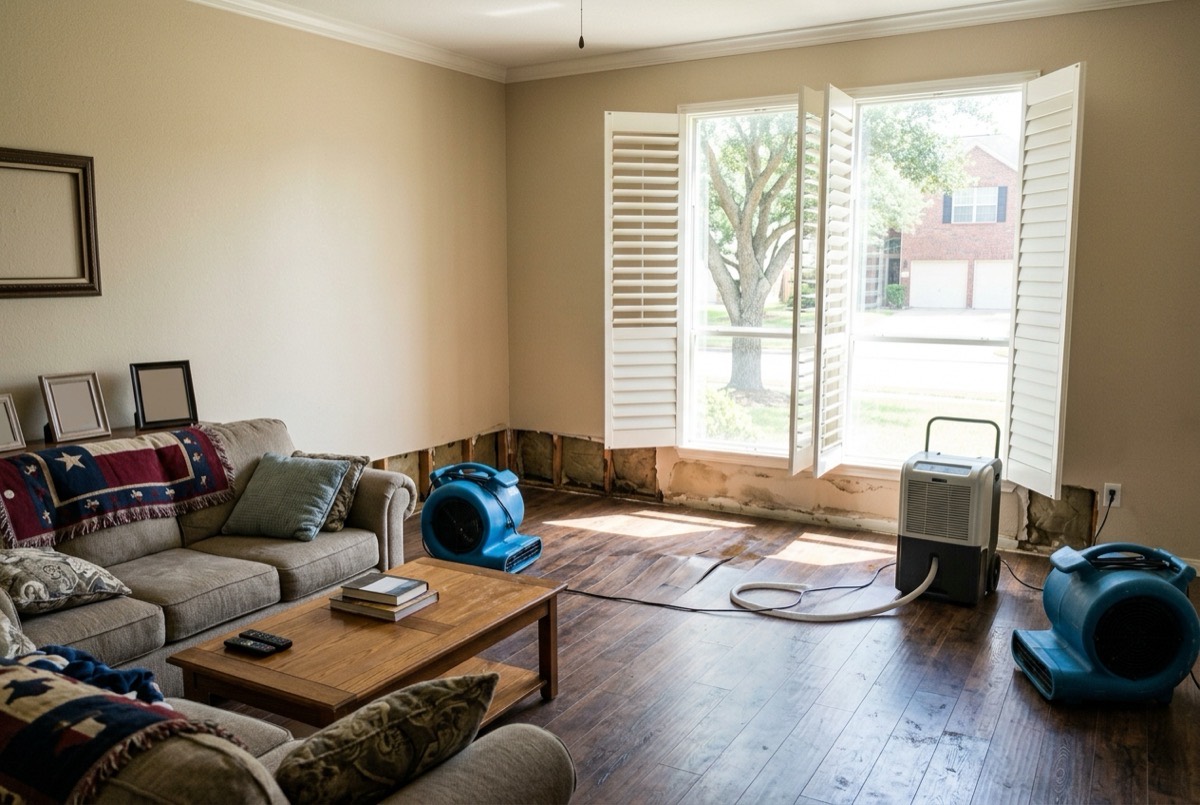
Restoration vs. Cleanup: The Four Phases
Restoration is not the same as cleanup. Cleanup removes what you can see. Restoration deals with what you cannot: water that has wicked up drywall, soaked into subfloor, and moved sideways under baseboards and cabinet kicks.
The work runs in four phases. Inspection maps how far the water travelled and what category it is — clean supply water, grey water from an appliance, or contaminated water from a sewer line or storm. Extraction pulls standing water out. Structural drying uses air movers and dehumidifiers to drop materials back to a documented dry standard. Repair puts back the drywall, trim, and flooring that came out.
Skipping a phase is how a job comes back.
What Separates Expert Work From Adequate Work
The difference between an average job and expert water damage restoration is measurement. Water damage restoration experts do not decide a wall is dry by touching it. They take moisture readings on affected and unaffected material, set a target, log readings daily, and keep equipment running until the numbers hold — not until the third day, because three days is what someone guessed.
Two things we will not do. We will not waive or absorb your insurance deductible; in Texas that is illegal, and any contractor offering it is telling you something about the rest of their work. And we do not perform mold remediation or assessment — that is licensed separately in Texas. If drying reveals mold, we say so and document it.
Before we arrive
Do These First
The first two matter most. The last is a hard rule.
- Shut off the water Close the fixture valve, or the main shutoff at the meter.
- Kill power to wet rooms Switch off the breaker before walking into standing water.
- Lift what you can Move furniture, rugs and boxes off wet flooring and onto a dry surface.
- Photograph everything Wide shots and close-ups, before anything moves — your insurer will want them.
- Call your insurer, then us Open the claim; we document readings and scope for your adjuster.
- Leave sewage water alone Contaminated water needs protective gear; wait for a crew.
Why Drying Takes Longer in Katy
Katy sits on flat, slow-draining Gulf Coast clay, and most homes here are built on slab. That combination shapes every job we take. Water on a slab does not drain down — it spreads out, runs under the tile bed and the cabinet toe kicks, and reaches rooms that never looked wet.
Humidity is the second factor. In colder parts of the country, restoration is mostly a winter frozen-pipe business and outdoor air is dry enough to help. Here, opening windows adds moisture. Drying has to be done with dehumidifiers in a closed environment, and it takes longer than homeowners expect.
Slab drying also means going after water you cannot reach from the room. Wet tile bed and cabinet kicks get drilled or lifted, wall cavities get dried through the base plate, and equipment stays running past the point where the floor feels dry — because the slab is still giving moisture back.
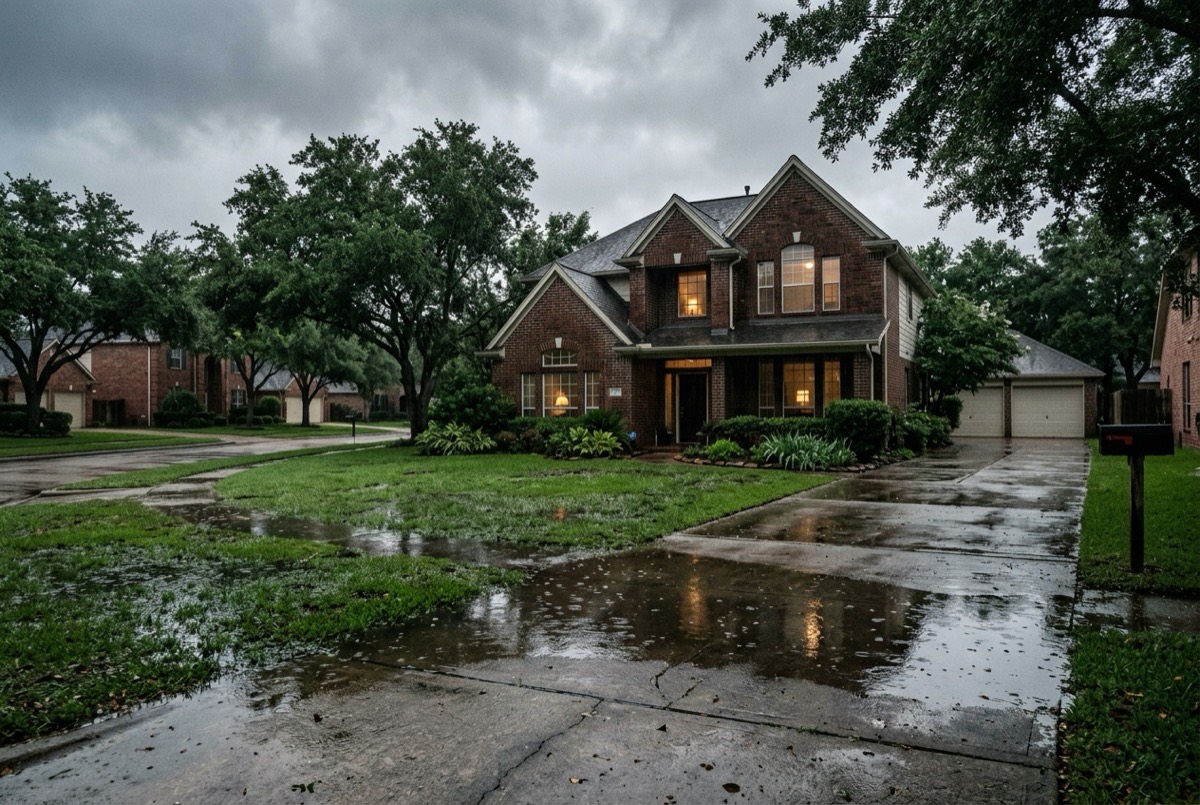
Wet Floor Right Now?
If your floor is wet right now, stop reading and call. We answer 24/7, aim to be moving within 30 minutes, and the estimate costs nothing.
Call (281) 801-9222.