
Slab leak water damage in Katy, TX
Call us for the drying and repair half of a slab leak, once a plumber finds and stops the pipe.
Get Help Now(281) 801-922224/7 emergency line. Free estimates from local pros.
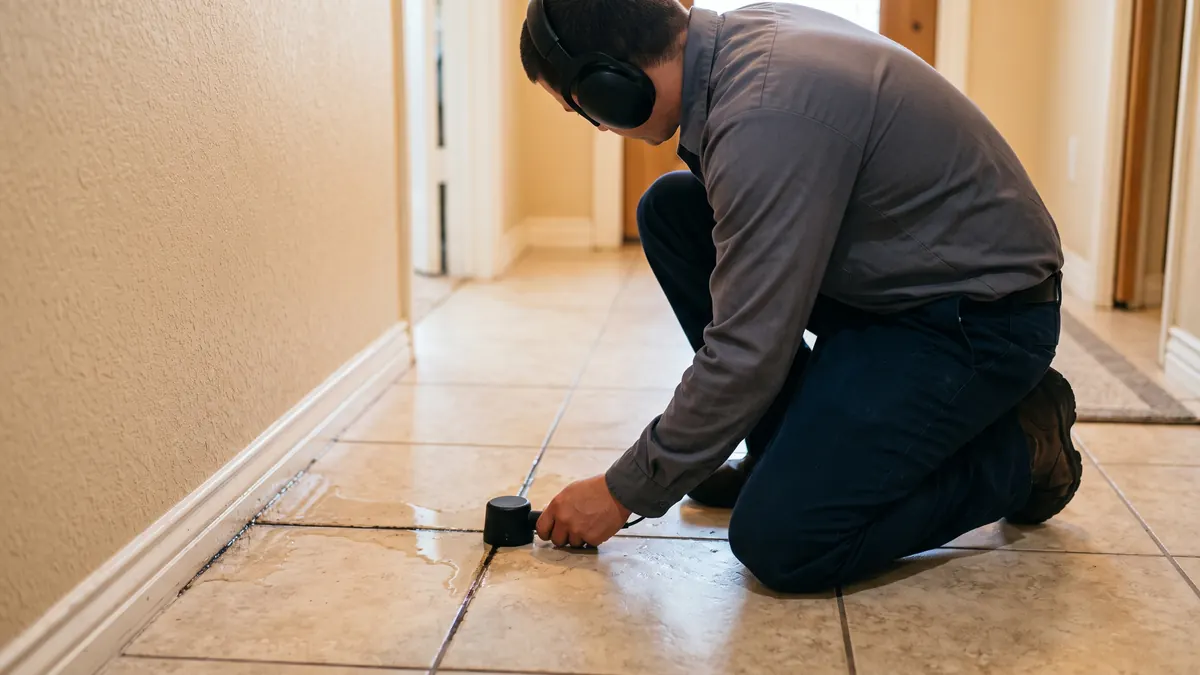
A slab leak in a Katy home usually needs two different companies, not one. A plumber or leak-detection company finds the broken pipe and stops the water. A restoration company dries out and repairs everything the leak touched before anyone knew it was there. If your floor feels warm in one spot or your water bill jumped for no reason, you probably need both calls. This page is about the second one, the drying and repair side, and why it matters as much as fixing the pipe itself.
Two jobs, two calls
Plumbers fix pipes. Restoration crews fix what the water from that pipe damaged along the way. That split trips people up because a slab leak rarely announces itself with standing water. It shows up as a warm patch of tile, a faint hum under the floor, or a bill that doesn’t match your usage. By the time you notice, water has often been moving under your slab for days.
You don’t have to figure out which call to make first. A plumber who confirms the leak will tell you the wet materials still need drying out. A restoration company that gets there first can start checking moisture levels while you line up leak detection. Neither one replaces the other. Most Katy homes with a slab leak end up needing both before the job is done. Skipping the restoration half is how a fixed pipe still leaves a house with soft flooring or a lingering musty smell months later.
Signs your slab is leaking
Watch for these before you ever see a puddle:
- A warm or damp patch on an otherwise cool tile or wood floor
- Your water meter keeps turning even with every faucet and appliance off
- A water bill that climbs with no obvious reason
- A hissing or running-water sound coming from inside the floor
- Cracks, cupping, or buckling in flooring near the suspected leak
- A musty smell in one room with nothing visibly wet
Any one of these on its own is worth a call. Two or three together usually mean the leak has been running a while. Homeowners in 77449, 77450, 77493, and 77494 report the same pattern most often. A spike on the water bill comes first. A warm spot underfoot follows a week or two later, once someone finally goes looking for it.
What happens once the leak is found and stopped
Restoration work on a slab leak starts with mapping how far the water traveled, not just where it surfaced. A technician checks moisture levels in the flooring, baseboards, and the bottom few inches of drywall around the wet area. Water under a slab tends to spread sideways before it ever shows on top, so the map matters more than the visible spot. That map decides what gets pulled and what gets dried in place.
Wet baseboards usually come off so air can reach the wall cavity behind them. Flooring near the leak, especially wood or laminate, often has to come up if it’s already cupping or trapped moisture has nowhere to go. Air movers and dehumidifiers go in to dry the area. The crew checks moisture readings again over the following days rather than guessing when the space is dry. Only once those readings come back normal does repair work start, which keeps you from paying to patch drywall over a wall cavity that’s still wet.
Waiting doesn’t shrink the job, it grows it. A leak caught early might mean drying one room and replacing a few feet of flooring. The same leak left alone for weeks can spread under a hallway, into a closet, or up the base of a cabinet run, turning a small repair into a much bigger one.
Finding the leak without tearing up your whole floor
Nobody wants a plumber guessing with a jackhammer. Most leak-detection work starts with listening equipment sensitive enough to pick up water escaping under pressure. Pressure testing then narrows the search to a small section of slab. Infrared cameras sometimes help too, since a wet area under concrete often reads slightly warmer or cooler than the dry slab around it. Our guide to slab leak signs digs into each of these warning signs in more detail, including which ones tend to show up first in a Katy home.
Once the leak is pinpointed, the plumber decides whether to tunnel under the foundation or cut through the slab from above. Either way, the goal is the same: fix the pipe while disturbing as little of your home as possible. Good detection also limits how much repair follows. A leak pinpointed to a two-foot area means a two-foot opening. A guess can turn into several feet of open slab before anyone actually finds the pipe.
What to document while you wait
Take photos of the warm spot, the water meter reading, and any visible flooring damage before anyone starts cutting into the slab. A plumber’s invoice showing the leak location and repair date is worth keeping too. A restoration estimate and an insurance file both lean on that paperwork later. Write down the date you first noticed the sign and the date each company visited. None of this slows down getting help. It just means you’re not trying to reconstruct a timeline from memory a month later, once the insurance questions start.
Why your home’s age matters
Katy’s plumbing story splits by construction era. Old Katy’s historic core and Kelliwood, built mostly between 1984 and 2006, sit on the copper-under-slab side of that line. Cinco Ranch’s east side, underway since 1991, shares that same era. Its newer western sections moved to PEX plumbing, and so did newer communities like Cane Island and Elyson, which broke ground after 2015. PEX doesn’t corrode the way copper does.
That doesn’t make PEX-era homes leak-proof. Fittings still fail. Our clay soil still shifts foundations enough to stress a supply line, and a nail through a run during a remodel doesn’t care what decade your house was built. Newer construction lowers the odds of a slab leak. It doesn’t remove them. A 2016-built home in Elyson can still develop a slab leak from ground movement alone, even with no copper pipe anywhere on the property.
What insurance usually says about slab leaks
This is the one place a slab leak gets treated differently than a burst pipe. The water was often moving under the floor for days or weeks before anyone noticed. Because of that, adjusters tend to look closely at how long the leak ran, rather than treating it as a single sudden event. Many Texas policies cover sudden, accidental water damage more readily than damage that built up gradually. Where a slab leak lands can depend on the specifics of your policy and how fast it was caught. The water damage insurance claim guide explains what the process looks like once an adjuster is involved.
Once the leak is stopped and the damage assessed, repair comes down to what can be dried and saved versus what has to come out. The water damage repair page explains how that decision usually gets made, including flooring, drywall, and cabinets, and when matching your existing materials gets harder than you’d expect.
The part you can’t see is the expensive part
A slab leak is quiet. It works under your feet for days or weeks before it turns into a stain, a smell, or a bill you can’t explain. That’s the real risk, not the pipe itself. The sooner both calls happen, the smaller the repair ends up being, and the less guessing everyone has to do about where the water went.
Common questions
Is a slab leak covered by homeowners insurance in Katy?
It depends on your policy and how long the leak ran before anyone caught it. Many Texas policies cover sudden, accidental water damage, but a slab leak that seeped for weeks can get treated differently by an adjuster. The water damage insurance claim guide on this site explains what happens once you file.
Do they tunnel under the slab or jackhammer through it?
Both methods exist and a plumber picks based on where the pipe sits. Tunneling digs a path under the foundation and around the pipe, leaving your floor alone. Jackhammering breaks through the slab from above, which is often faster but means more concrete and flooring to put back.
How do plumbers find a slab leak without tearing up my floor?
Most start with listening equipment that picks up the sound of pressurized water escaping under the slab, then narrow the spot with pressure testing. Some also use infrared cameras to spot warm areas in the floor. All of this happens before any real digging starts, so less concrete comes up.
Should I call a plumber first or a restoration company first?
Either call is a fine first step, and the two companies usually end up talking to each other anyway. A plumber who stops the leak will tell you the wet flooring and drywall still need drying out. Calling restoration first gets someone assessing the damage while you line up leak detection separately.
Related pages
Appliance leaks
The appliances you trust most every day are also some of the quietest sources of water damage.
Learn more →Burst pipe damage
A frozen or failed supply line can flood a room fast, and drying it out right keeps the damage from spreading inside your walls.
Learn more →Ceiling damage
A stained or sagging ceiling means water is sitting somewhere above your head, and it needs attention fast.
Learn more →Commercial damage
Water in a business isn't just property damage, it's lost revenue for every day the doors stay shut.
Learn more →Talk to a local pro now
We answer 24/7. One call gets a Katy crew moving on your water damage, with a free estimate and help with your insurance claim.
Get Help Now(281) 801-9222Free estimates. No obligation to hire.